A Private Guide to Istanbul's Grand Bazaar and Its Finest Handmade Treasures.
Step through one of the old stone gateways of the Grand Bazaar and the light softens. Lanterns glow overhead, silk carpets catch the lamplight, and the air turns warm with tea, cedar, and fine leather. For more than five centuries, beautiful things made across this part of the world have passed through these vaulted lanes, and some of the finest still do.
This is a private guide to shopping for handmade treasures in Istanbul's Grand Bazaar, written for the traveler drawn not simply to souvenirs, but to craftsmanship: a hand-knotted silk carpet, a finely made piece of gold or jewelry from a trusted house, or a hand-painted Iznik-style tile in the traditional palette of Istanbul's imperial mosques.
These are pieces chosen not simply because they are expensive, but because of how they are made, the traditions behind them, and the hands responsible for creating them. Some become part of a home for decades. Others are collected, displayed, worn, or eventually passed on.
Whether you arrive intending to buy an authentic Turkish carpet or simply want to understand what makes one worth owning, the pleasure lies as much in learning as in acquiring.
A word before we begin. On our private Istanbul tours, shopping is never forced or obligatory. We open a door only when you ask us to, and only through craftspeople and shops we know and trust. What follows is not a shopping list. It is an introduction to Istanbul's art and craftsmanship, and to choosing well, quietly, and entirely on your own terms.
What Makes Shopping in Istanbul's Grand Bazaar Special?
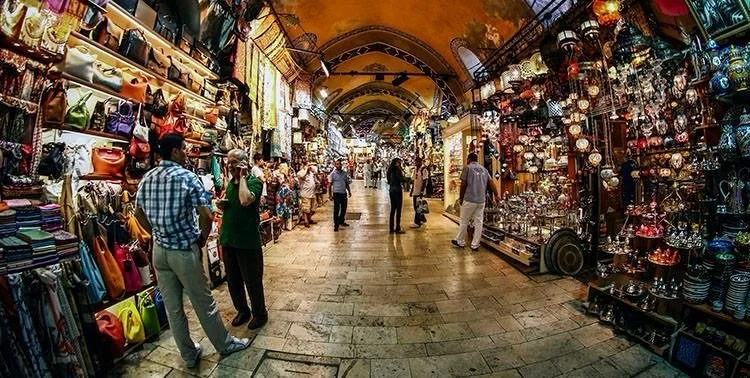
The Grand Bazaar is one of the world's oldest and most extensive covered markets, and it remains a living center of Turkish craftsmanship: carpets, rugs, gold, ceramics, calligraphy, and leather, made and traded here across generations.
Beyond the busiest thoroughfares lies an older, quieter world. At the heart of the bazaar stands the historic bedesten, the vaulted inner hall long associated with valuable goods, antiques, and jewelers. Around it are established houses and workshops that can be easy to pass without ever knowing what sits behind their doors.
What makes the experience special is not simply the opportunity to buy. It is the opportunity to understand.
Materials, techniques, regional traditions, age, condition, and workmanship all matter. The difference between an attractive object and a truly well-made piece is not always obvious at first glance.
With a private Istanbul tour guide beside you, there is time to look properly, ask questions, understand what you are seeing, and make a decision without pressure and without having to rush.
For a fuller sense of the district, and how the bazaar sits among Istanbul's great monuments, see our guide to a private Old City tour of Istanbul.
Where Do You Buy Authentic Turkish Rugs and Carpets?
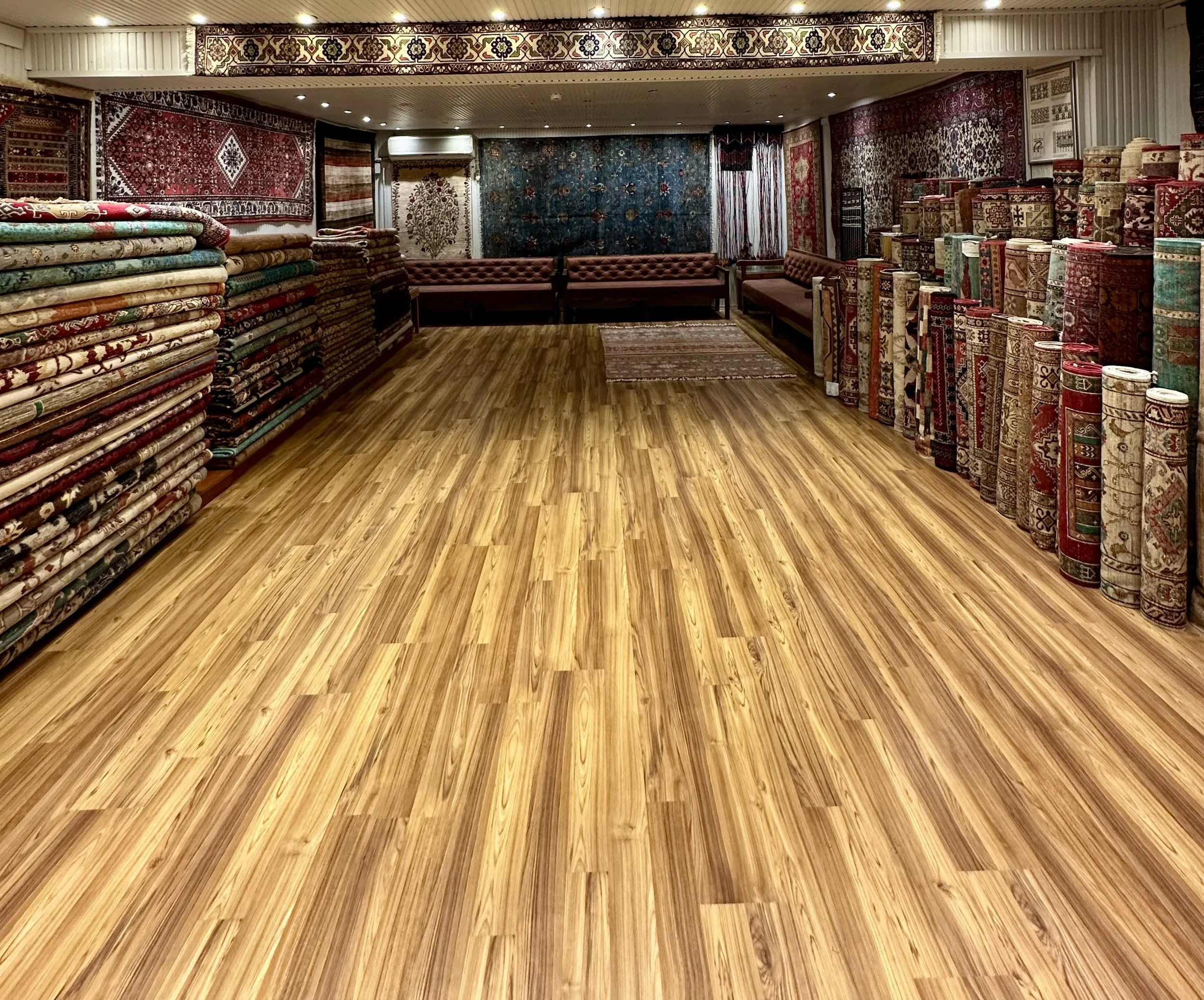
Authentic Turkish rugs and carpets can be found with long-established dealers in and around the Grand Bazaar, in silk, wool, and cotton, from finely knotted collectible pieces to runners and flatweave kilims.
Turkey holds one of the great weaving traditions of the world.
Among its best-known examples are the silk carpets associated with Hereke, near Istanbul, woven at exceptionally fine knot counts and admired for the way silk catches and changes with the light.
Alongside them are enduring wool carpets from different Anatolian regions, flatweave kilims, runners, and pieces in many sizes, patterns, and palettes. Each tradition carries its own materials, techniques, and visual language.
A knowledgeable guide and an established dealer can help you understand a carpet more carefully: the fiber, knot density, dyes, region, age, condition, and overall workmanship.
Turkish carpets are traditionally associated with the symmetrical Turkish knot, often called the double knot, which loops around two warp threads and contributes to the durability of the weave. When a hand-knotted piece is turned over, the construction itself becomes part of what you examine.
Natural dyes can also age differently from synthetic colors, developing depth over time, while the fringe of a traditionally constructed carpet continues from the foundation rather than simply being stitched on afterward.
The point is not to memorize a checklist. It is to understand why one piece deserves closer attention than another, and to have someone beside you who can help you ask the right questions.
When you find a carpet that feels right for your home or collection, documentation and international shipping arrangements can often be organized through the dealer, allowing larger purchases to travel home properly rather than becoming something you need to manage alone.
What Handmade Items Can You Find in Istanbul?
Beyond carpets, Istanbul is also known for handmade Iznik-style ceramics, Islamic calligraphy and miniature painting, finely made Turkish leather, and jewelry created through long-established traditions of metalwork and design.
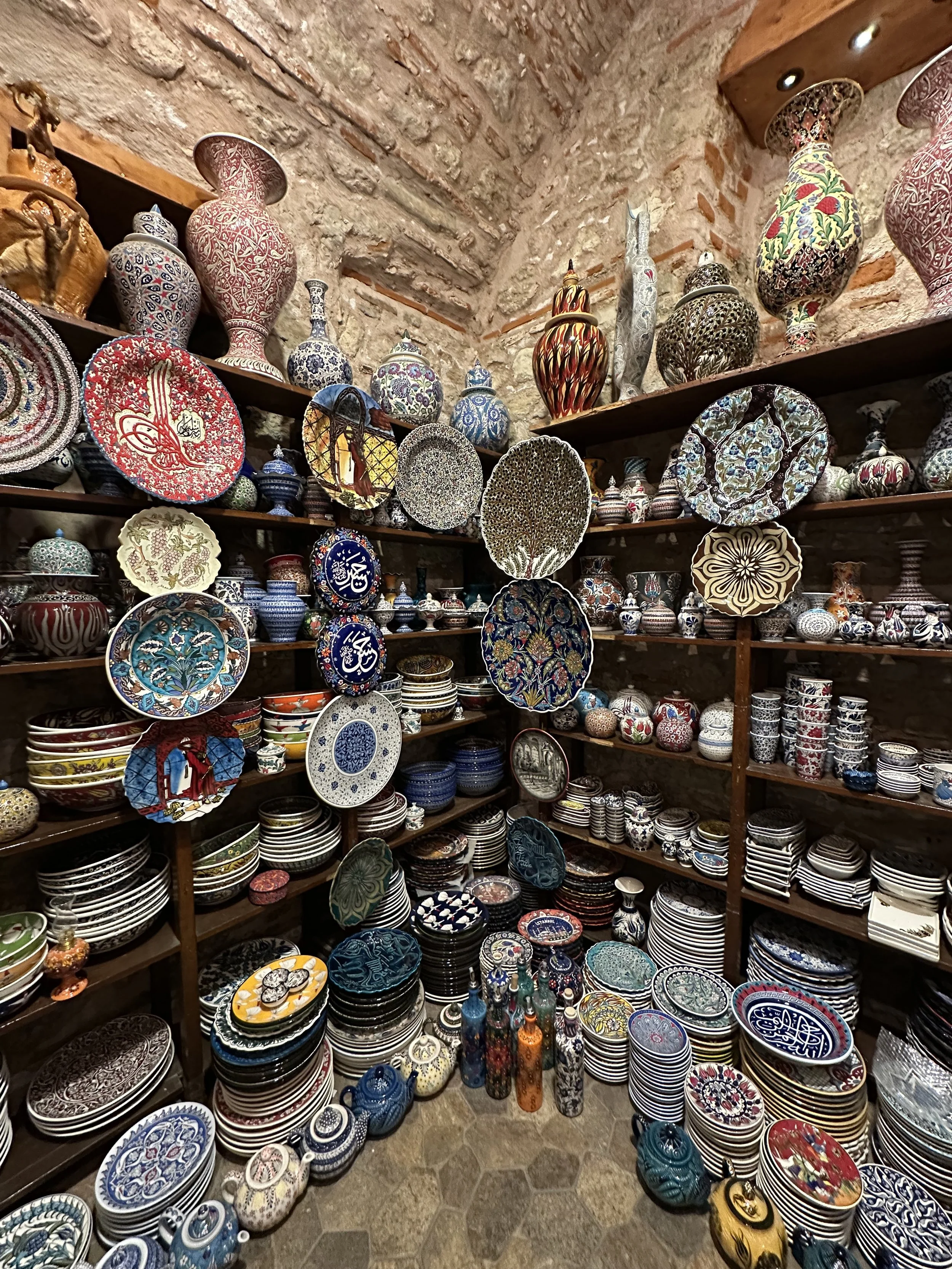
Iznik tiles and ceramics.
The cobalt blue, turquoise, and coral red associated with the tiles of Istanbul's imperial mosques continue to inspire contemporary ceramic workshops today.
Traditional-style pieces are hand-painted before glazing, and the quality of the drawing, color, surface, and finishing helps distinguish careful craftsmanship from mass-produced decoration.
A single framed tile, a bowl, or a considered group of pieces can bring centuries of Ottoman design language quietly into a contemporary home.
Calligraphy and miniature painting.
Calligraphy stands among the city's most respected art forms.
Original works, gilded panels, and hand-painted miniatures can make meaningful acquisitions, while personalized work may also be commissioned from an experienced calligrapher.
A name, a date, or a single word can become something created specifically for its owner rather than simply taken from a shelf.
Turkish leather.
Istanbul's leather tradition runs deep, from tailored jackets to bags and smaller leather goods.
Here especially, the quality of the atelier matters. Material, cutting, construction, and finishing make the difference between something chosen for a season and something that continues to wear beautifully over time.
Some travelers are looking for a small handmade piece to carry home. Others are interested in collectible works, traditional craftsmanship, or something created specifically for them.
The choice, and the pace, remain yours throughout.
Where Do You Buy Fine Gold and Jewelry in Istanbul?
Gold and jewelry are a signature of the Grand Bazaar, where long-established jewelers offer everything from classic high-carat gold to precious stones, contemporary work, and antique or estate pieces.
Istanbul has been a meeting point for goldsmiths and gem traders for centuries, and the bazaar remains an important center for jewelry today.
For the discerning buyer, the appeal lies as much in the craftsmanship as in the selection.
With a trusted jeweler, the gold, stones, workmanship, and details of a piece can be discussed openly before anything is decided. When looking at antique or estate jewelry, its history and available provenance can also become part of that conversation.
Many travelers come not for a collection of small purchases, but for one considered piece.
That approach suits Istanbul particularly well: taking the time to understand the work, considering how a piece was made, and choosing something because it genuinely speaks to you rather than simply because it catches your eye for a moment.
Can You Have Handmade Pieces Customized or Made to Order in Istanbul?
Yes. Many Istanbul workshops welcome commissions, from bespoke gold and jewelry to personalized calligraphy and carpets made to a particular specification.
This is where Istanbul's traditional craftsmanship can become something much more personal.
A ring or necklace can be designed around you, or an existing idea interpreted by a jeweler. A calligrapher can render a name, date, or word that carries meaning. A carpet house may help with size, palette, and design when you are looking for something suited to a particular room.
Because these pieces are made by hand, a commission requires a conversation and, at times, a little patience.
When you already know before traveling that a bespoke or personalized piece interests you, we can arrange an introduction to an appropriate workshop in advance so the process begins thoughtfully rather than in haste.
You can read more about how we shape private experiences around individual interests in our guide to custom-made Istanbul tours.
How Does Shopping for Handmade Items Work on a Private Istanbul Tour?
On our private Istanbul tours, shopping happens only when you ask for it.
We build no forced or commission-driven shopping stops into your day, and because we do not accept commissions or kickbacks from shops, we are not tied to a particular vendor.
Tell your guide that you would like to look at carpets, gold and jewelry, ceramics, calligraphy, or leather, and we can make thoughtful introductions to trusted craftspeople and established houses inside the Grand Bazaar or elsewhere in Istanbul, depending on what you are looking for.
You may be interested in learning how a carpet is made before buying one. You may want to compare different examples of traditional craftsmanship. Or you may already know that you are searching for one particular piece.
All of those approaches are equally welcome.
Prefer to explore the bazaar, understand its history, and buy nothing at all? That is welcomed just as warmly.
This is an important part of how we work. Your private tour is arranged around your own interests, and the price of the tour is agreed in advance. Shopping, when requested, is something you choose to include rather than an obligation built into your experience.
Why Explore Istanbul's Art and Craftsmanship With Us?
When you explore Istanbul with us, you can expect:
A wholly private experience arranged for your own party,
A licensed local guide who understands the Grand Bazaar and its craftsmanship,
No forced or commission-driven shopping stops,
No commissions or kickbacks from shops,
Introductions to trusted shops only when you are shopping,
Clear guidance on materials, workmanship, and the questions worth asking,
Assistance with documentation and international shipping arrangements where available,
The price of your tour agreed before you travel, with no hidden tour costs,
A female guide on request wherever one is available,
The freedom to shape the experience around your interests and your pace,
For us, the purpose is not to turn a cultural visit into a shopping itinerary.
It is to give interested guests the opportunity to understand Istanbul's craftsmanship more deeply and, when they wish, to meet the people and houses keeping those traditions alive.
Private Notes Before You Plan
Is shopping included in a private Istanbul tour?
Shopping is never forced or secretly added to our tours. If you would like to visit a carpet dealer, jeweler, ceramic workshop, calligrapher, or leather atelier, simply let us know. We can make thoughtful introductions to trusted houses, while the decision to look, buy, or simply continue with your day remains entirely yours.
Is the Grand Bazaar a good place to find handmade pieces?
Yes. Beyond its busy main lanes, the Grand Bazaar remains home to respected dealers and craftspeople working with hand-knotted carpets, gold and jewelry, Iznik-style ceramics, calligraphy, and leather. The experience becomes much more rewarding when you understand what you are looking at and know which questions to ask.
What kinds of traditional craftsmanship can you find in Istanbul?
Istanbul is known for a wide range of traditional craftsmanship, including hand-knotted carpets and kilims, Iznik-style ceramics, calligraphy, miniature painting, leatherwork, gold, and jewelry. Some pieces are decorative, some functional, and others are collected as works of art or examples of a particular craft tradition.
How do you know a Turkish rug or carpet is genuine?
A knowledgeable guide and an established dealer can help you understand a carpet's material, knot type, knot density, dyes, region, age, condition, and workmanship before you decide to buy. Turkish carpets are traditionally associated with the symmetrical Turkish, or double, knot, and examining the reverse of a hand-knotted piece can reveal a great deal about how it was made.
What is the difference between silk, wool, and cotton carpets?
Silk carpets are finely woven and known for a soft sheen that changes as the light and viewing angle change. Wool is warm, durable, and widely used in carpets intended for the floor. Cotton is frequently used in carpet foundations and also appears in some flatweave work. The right material depends on the piece itself and how you intend to live with it.
What is Hereke silk?
Hereke is a town near Istanbul famous for exceptionally fine carpets and a weaving tradition historically associated with the Ottoman court. Hereke silk carpets are known for very fine knotting, precise designs, and the distinctive way their surfaces respond to light. Well-made examples are often approached as collectible pieces rather than ordinary floor coverings.
Can you ship a Turkish carpet internationally?
International shipping can often be arranged through established carpet dealers once you have chosen a piece. The dealer can explain the documentation and shipping options available for your particular purchase and destination.
Can you have jewelry, calligraphy, or rugs customized in Istanbul?
Yes. Many workshops welcome commissions, including bespoke gold and jewelry, personalized calligraphy, and carpets created or sourced around a chosen size, palette, and design. If a custom piece is an important part of your visit, letting us know in advance allows the right introduction to be considered before your arrival.
How do you arrange a private shopping experience during your tour?
Simply tell us in advance, or tell your guide during your tour, what interests you. We can make thoughtful introductions to craftspeople and houses we know and trust, while keeping the experience private, unhurried, and without an obligation to buy.
Ready to Discover Istanbul's Finest Handmade Treasures?
Tell us your travel dates, the size of your party, and whether you would like to include a private, unhurried look at Istanbul's carpets, gold and jewelry, ceramics, calligraphy, leather, or other examples of traditional craftsmanship.
We will design a private experience with a licensed local guide, arranged directly with our Istanbul-based team and shaped around your interests and your pace.
Call/Message/WhatsApp: +90 537 741 00 62
Private Istanbul Walking Tours is a women-owned, owner-operated, fully licensed travel agency based in Istanbul. We arrange private guided Istanbul tours, private Bosphorus yacht experiences, tailor-made itineraries, private transportation, hotel accommodation, and custom travel planning throughout Turkey. TURSAB License: A-12755.